Image Processing-Based Morris Water Maze Rat Tracking System: Design and Analysis
DOI:
https://doi.org/10.59247/jfsc.v4i3.411Keywords:
Acquisition Tria, Tracking, Probe Trial, Morris Water MazeAbstract
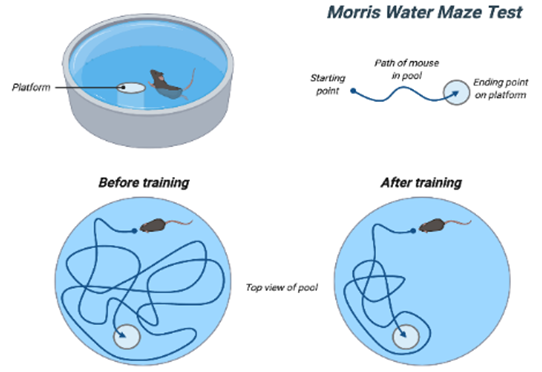
Four experimental rats consisting of one normal rat and three Alzheimer's-induced rats were analyzed. The proposed system employed ImageJ integrated with the RatsTrack and Macro RatsTrack plugins using a centroid based tracking approach. The system successfully extracted movement trajectories, distance travelled, speed, acceleration, and quadrant dwell time during acquisition and probe trials. The system performance was validated by comparing quadrant dwell times obtained from the proposed system with manual observations. The percentage differences ranged from 2.29% to 70.97%. demonstrating that the proposed system can effectively represent rat behavioral patterns, although discrepancies remain in certain quadrants requiring further refinement.
References
C. Faes, M. Aerts, H. Geys, and L. De Schaepdrijver, “Modeling spatial learning in rats based on Morris water maze experiments,” Pharmaceutical Statistics, vol. 9, no. 1, pp. 10–20, 2010, https://www.doi.org/10.1002/pst.361.
C. V. Vorhees and M. T. Williams, “Morris water maze: Procedures for assessing spatial and related forms of learning and memory,” Nature Protocols, vol. 1, no. 2, pp. 848–858, 2006, https://www.doi.org/10.1038/nprot.2006.116.
M. Z. Othman, Z. Hassan, and A. T. C. Has, “Morris water maze: a versatile and pertinent tool for assessing spatial learning and memory,” Experimental Animals, vol. 71, no. 3, pp. 264–280, 2022, https://www.doi.org/10.1538/expanim.21-0120.
F. Mohseni, S. Ghorbani Behnam, and R. Rafaiee, “A Review of the Historical Evolutionary Process of Dry and Water Maze Tests in Rodents,” Basic and Clinical Neuroscience Journal, vol. 11, no. 4, pp. 389–400, Jul. 2020, https://www.doi.org/10.32598/bcn.11.4.1425.1.
J. Kuruvilla, D. Sukumaran, A. Sankar, and S. P. Joy, “A review on image processing and image segmentation,” in 2016 International Conference on Data Mining and Advanced Computing (SAPIENCE), IEEE, pp. 198–203, 2016, https://www.doi.org/10.1109/SAPIENCE.2016.7684170.
A. Vouros et al., “A generalised framework for detailed classification of swimming paths inside the Morris Water Maze,” Scientific Reports, vol. 8, no. 1, 2018, https://www.doi.org/10.1038/s41598-018-33456-1.
S. Dalm, J. Grootendorst, E. R. De Kloet, and M. S. Oitzl, “Quantification of swim patterns in the Morris water maze,” Behavior Research Methods, Instruments, and Computers, vol. 32, no. 1, pp. 134–139, 2000, https://www.doi.org/10.3758/BF03200795.
E. Baldi, M. Efoudebe, C. A. Lorenzini, and C. Bucherelli, “Spatial navigation in the Morris water maze: Working and long lasting reference memories,” Neuroscience Letters, vol. 378, no. 3, pp. 176–180, 2005, https://www.doi.org/10.1016/j.neulet.2004.12.029.
L. J. Lissner, K. M. Wartchow, A. P. Toniazzo, C. A. Gonçalves, and L. Rodrigues, “Object recognition and Morris water maze to detect cognitive impairment from mild hippocampal damage in rats: A reflection based on the literature and experience,” Pharmacology Biochemistry and Behavior, vol. 210, p. 173273, 2021, https://www.doi.org/10.1016/j.pbb.2021.173273.
C. A. Schneider, W. S. Rasband, and K. W. Eliceiri, “NIH Image to ImageJ: 25 years of image analysis,” Nature Methods, vol. 9, no. 7, pp. 671–675, 2012, https://www.doi.org/10.1038/nmeth.2089.
M. D. Abràmoff, P. J. Magalhães, and S. J. Ram, “Image processing with imageJ,” Biophotonics International, vol. 11, no. 7, pp. 36–41, 2004, https://www.doi.org/10.1201/9781420005615.ax4.
M. G. Forero, N. C. Hernández, C. M. Morera, L. A. Aguilar, R. Aquino, and L. E. Baquedano, “A new automatic method for tracking rats in the Morris water maze,” Heliyon, vol. 9, no. 7, p. e18367, 2023, https://www.doi.org/10.1016/j.heliyon.2023.e18367.
A. Mathis et al., “DeepLabCut: Markerless pose estimation of user-defined body parts with deep learning,” Nature Neuroscience, vol. 21, no. 9, pp. 1281–1289, 2018, https://www.doi.org/10.1038/s41593-018-0209-y.
F. Romero-Ferrero, M. G. Bergomi, R. C. Hinz, F. J. H. Heras, and G. G. de Polavieja, “Idtracker.Ai: Tracking all individuals in small or large collectives of unmarked animals,” Nature Methods, vol. 16, no. 2, pp. 179–182, 2019, https://www.doi.org/10.1038/s41592-018-0295-5.
L. Su et al., “Siamese Network-Based All-Purpose-Tracker, a Model-Free Deep Learning Tool for Animal Behavioral Tracking,” Frontiers in Behavioral Neuroscience, vol. 16, p. 759943, 2022, https://www.doi.org/10.3389/fnbeh.2022.759943.
Published
How to Cite
Issue
Section
License
Copyright (c) 2026 Sutrisno Ibrahim, Gayatri Dewani, Joko Hariyono, Faisal Rahutomo, Nanang Wiyono, Ratih Yudhani

This work is licensed under a Creative Commons Attribution-ShareAlike 4.0 International License.
